


Father Chris's Homilies
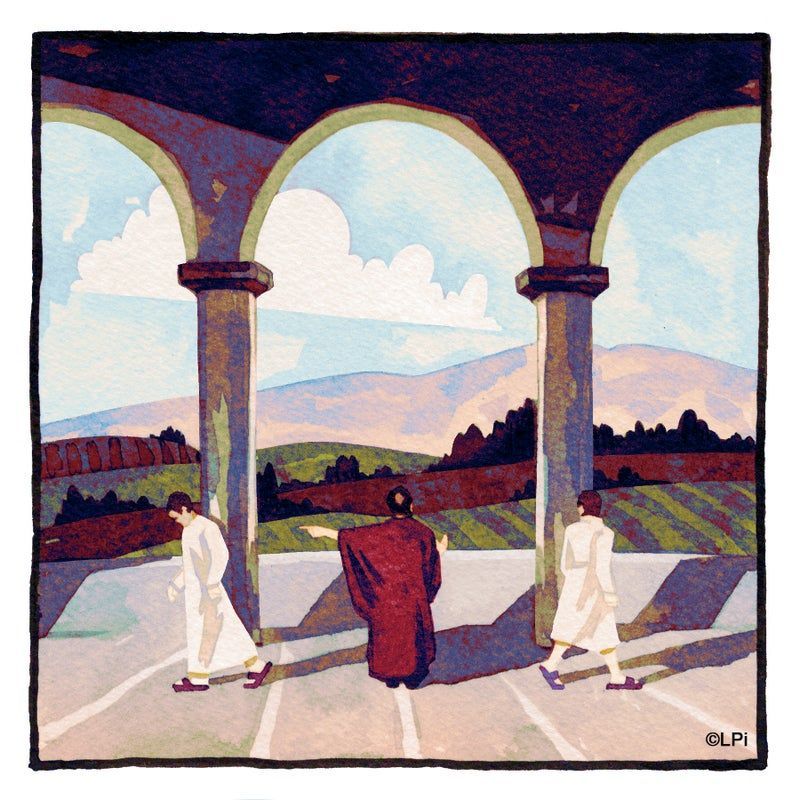
In today's parable we meet two brothers; one says he will go and doesn’t, the other says he will not go and does. The listeners decide the second did his father’s will. In life we judge people not by their words but by their actions. Those who act upon their words we honor. We are given second chances to reconsider our words and decide to do what we are asked to do. Too often it is hard to say 'yes' and act upon our 'yes'. This may have been the case with the second brother, but in time he said 'yes' by his actions. I am reminded of a meditation by Michael Quoist: I am afraid of saying "Yes," Lord. Where will you take me? I am afraid of drawing the longer straw, I am afraid of signing my name to an unread agreement, I am afraid of the "yes" that entails other "yeses." And yet I am not at peace. You pursue me, Lord, you besiege me. I seek out the din for fear of hearing you, but in a moment of silence you slip through. I turn from the road, for I have caught sight of you, but at the end of the path you are there awaiting me. Where shall I hide? I meet you everywhere. Is it then impossible to escape you? But I am afraid to say "Yes," Lord. I am afraid of putting my hand in yours, for you hold on to it. I am afraid of meeting your eyes, for you can win me. I am afraid of your demands, for you are a jealous God. I am hemmed in, yet I hide. I am captured, yet I struggle, and I fight knowing that I am defeated. For you are the stronger, Lord, you own the world and you take it from me. When I stretch out my hand to catch hold of people and things, they vanish before my eyes. It's no fun, Lord, I can't keep anything for myself. The flower I pick fades in my hands. My laugh freezes on my lips. The waltz I dance leaves me restless and uneasy. Everything seems empty, Everything seems hollow, You have made a desert around me. I am hungry and thirsty, And the whole world cannot satisfy me. And yet I loved you, Lord; what have I done to you? I worked for you; I gave myself for you. O great and terrible God, What more do you want? * * * Son, I want more for you and for the world. Until now you have planned your actions, but I have no need of them. You have asked for my approval, you have asked for my support, You have wanted to interest me in your work. But don't you see, son, that you were reversing the roles? I have watched you, I have seen your good will, And I want more than you, now. You will no longer do your own works, but the will of your Father in heaven. Say "Yes," son. I need your "yes" as I needed Mary's "yes" to come to earth, For it is I who must do your work, It is I who must live in your family, It is I who must be in your neighborhood, and not you. For it is my look that penetrates, and not yours, My words that carry weight, and not yours, My life that transforms, and not yours. Give all to me, abandon all to me. I need your "yes" to be united with you and to come down to earth, I need your "yes" to continue saving the world! * * * O Lord, I am afraid of your demands, but who can resist you? That your Kingdom may come and not mine, That your will may be done and not mine, Help me to say "Yes." — Michael Quoist in Prayers
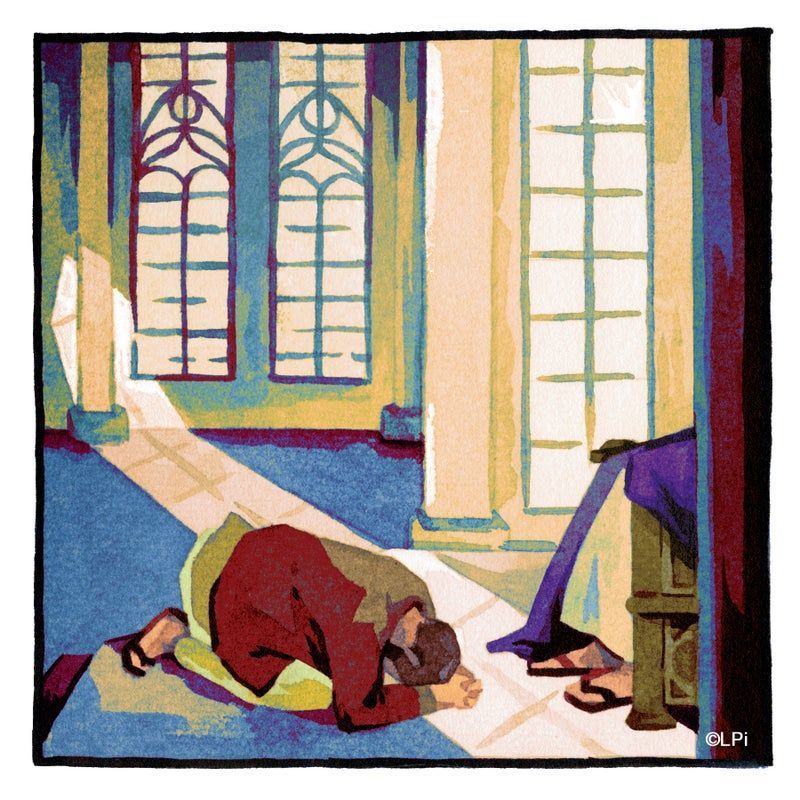
In the Masterpiece production of The Count of Monte Cristo , the main character is sent to prison; there he meets another prisoner who advises him, “If you seek for revenge, you should first dig two graves.” After the count achieves revenge he tells his friend, “The prisoner was right.” She responds, “Love can heal.” The readings today speak about forgiveness. Forgiveness is about choosing to love. When we forgive the other, we may not receive what we hoped for from the other. Forgiveness or love are not about the other person, but about me. There are many I will choose to love whom I do not like. Love is not simply about feelings, but love is a choice to forgive the other, means not hearing the words “I was wrong” or “I forgive you.” The choice to love may not change the other, but it will change me. One reason Jesus tells Peter to forgive 7 times 70 is that it may take time for the forgiveness to have an effect upon him. Jesus is familiar with the words of Sirach: hate not your neighbor; remember the Most High’s covenant, and overlook faults (Sir 28:7). Sometimes people will ask me why such and such is allowed to act as they do. I find myself reminding them that it is God who judges. King David knew he had done wrong, yet he was able to write the words of Psalm 103 — The Lord is kind and merciful, slow to anger, and rich in compassion — the psalm for today’s Mass. For the many things he did as pope, Pope Francis may be best remembered for a short phrase: "who am I to judge?" When asked who he was, Pope Francis responded, “I am a sinner.” We all have people in our lives who we would like to punish to seek revenge, but the better way is to forgive from our heart. When we forgive, we leave the judging to our God. Remember, it is “love that can heal.”

We all have storms in our lives. The issue for Peter seemed to have been, when he took his eyes off of Jesus, he began to drown. We need to keep our eyes on Jesus and when we experience storms in our lives that is how we get through, we keep our eyes on Jesus and we get through. The second thing Peter did when he began to drown is he called out to Jesus, “Save me, Jesus.” Jesus reached out and took Peter’s hand. Peter experienced being saved by the hand of Jesus. Today’s Gospel reminds me of the song “Hold On” from the musical The Secret Garden , based upon the book by Frances Hodgson Burnett. In the play, Mary Lennox is orphaned and moves in with her uncle. Her uncle is a hunchback and his wife died in childbirth; their child (Mary's cousin) is kept in isolation for fear he will be a hunchback like his father. Mary discovers her cousin’s mom’s garden and together they work to bring it back to life. The child begins to get well; when her uncle’s brother complains, Mary consults Martha the maid. Martha sings “Hold On”. Martha is singing about the situation with Mary’s cousin and uncle, but holding on to the face of Christ is how we weather our storms. Look up the song on YouTube. Here are some of the words from the song: When you see the storm is coming, See the lightning part the skies, It's too late to run- There's terror in your eyes! What you do then is remember This old thing you heard me say: "It's the storm, not you, That's bound to blow away." Hold on, Hold on to someone standing by. Hold on. Don't even ask how long or why! Child, hold on to what you know is true, Hold on 'til you get through. Child, oh child! Hold on! When you feel your heart is poundin', Fear a devil's at your door. There's no place to hide- You're frozen to the floor! What you do then is you force yourself To wake up, and you say: "It's this dream, not me, that's bound to go away." Hold on, Hold on, the night will soon be by. Hold on, Until there's nothing left to try. Child, hold on, There's angels on their way! Hold on and hear them say, "Child, oh child!" And it doesn't even matter If the danger and the doom Come from up above or down below, Or just come flying At you from across the room! When you see a man who's raging, And he's jealous and he fears That you've walked through walls He's hid behind for years. What you do then is you tell yourself to wait it out And say it's this day, not me, That's bound to go away.
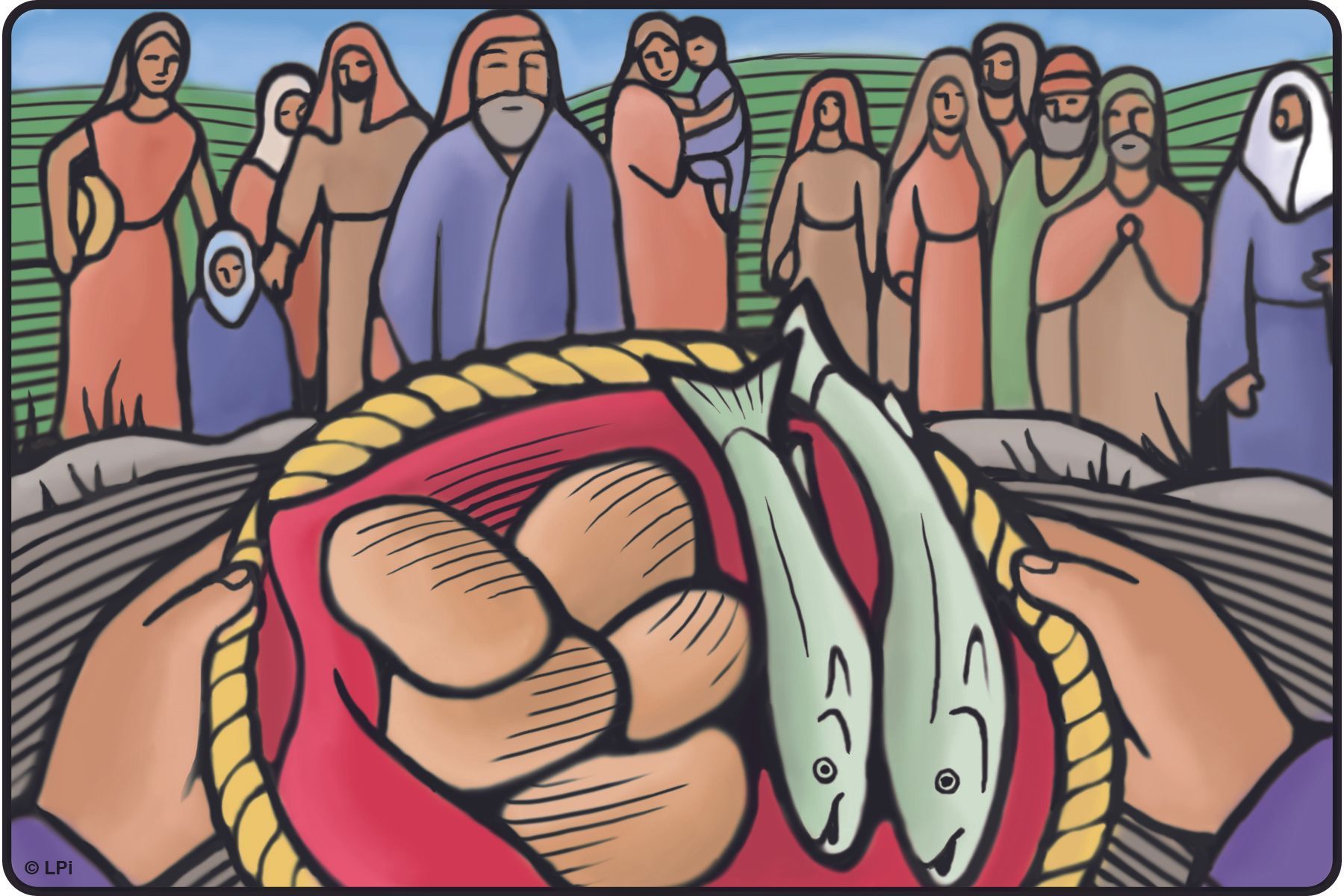
The gospel begins with the words: When Jesus heard of the death of John the Baptist.... John is Jesus’ cousin; John is the one who leaped in his mother's womb when he met Jesus in his mother’s womb. John is the one who baptized Jesus and now Jesus hears that John is dead by being beheaded. Jesus is in grief and wants to be alone. We are told that in his grief, Jesus went off to be alone. Word gets out where Jesus is and all the people show up looking for him to heal and feed them. We are told that Jesus’ heart is full of compassion for the people. Rather than telling them to go away, to let him be, he heals them. This is the life of a disciple – people are not in need on my schedule. When people show up, I need to attend to them. We can never do ministry with our eye on the clock. Although he was tired and in grief, Jesus cared for the people. He knew he could not be there always and his disciples would need to help out. When the disciples tell Jesus the people are hungry, the disciples were the hungry ones. Jesus tells them to give them something yourselves. This is Jesus’ way of calling them to act as disciples. I have fed them with my words; if they need food for their bodies, give it to them yourselves. The disciples find five loaves and two fish. Jesus offers a prayer. Jesus gives thanks for what has been provided, an action of gratitude. He then gives them to the disciples to distribute. Jesus is asking them to continue his ministry by feeding the people. What is left over fills 12 baskets; the number 12 reminds us of the 12 tribes. Jesus has come to feed the whole world. Jesus provides the feast and we as disciples share what we have been given with others. The five loaves and two fish are enough to feed the crowd and provide many leftovers. Our God is a God of abundance. What God has provided is not wasted and what God has provided is given to us by disciples who participate in God’s work. If we are to be disciples, we need to learn how to feed others. Like Jesus, we may find that being a disciple interrupts our life. When someone is in need we attend, we put aside our own agenda for a time and attend to the person in need. Our grief may come later after we care for the person in need. Those who were fed echo the words of Isaiah in the first reading. They come and are fed body and soul. The feeding of the soul are the words of Jesus and the feeding of the body comes from the hands of the disciples.

For many old movie buffs, the movie King Solomon's Mines is a classic. Our first reading tells the story of King Solomon and his prayer for wisdom. “For the treasures of his heart, not his mines, Solomon is rightly remembered.” The parables speak of searching for treasure; for us the treasure is our relationship with God. The one who found the treasure in the field sells all he has to buy the field. The merchant searching for pearls sells all when he finds one that is perfect. Today we are asked to consider: What is my treasure? What is my pearl of great price? What is so important I would sell all I have to possess it? In the parables Jesus is speaking about the kingdom of God. What is more important to us than the kingdom of God? What would I sell to possess the kingdom of God? I am reminded of a story by Fr. Anthony DeMello, a priest from India: When a holy man reached the outskirts of the village and settled under a tree for the night, a villager came running up to him and said, “The stone! The stone! Give me the precious stone!” “What stone?” asked the holy man. “Last night Lord Shiva told me in a dream that if I went to the outskirts of the village at dusk, a holy man would give me a stone that would make me rich forever.” The holy man rummaged in his sack and, pulling out a stone, he said, “He probably meant this one. I found it in the forest yesterday. Here, it’s yours if you want it.” The man gazed at the stone in wonder. It was the largest diamond in the world – the size of a man’s head. All night he tossed about in bed. At break of day he woke the holy man and said, “Give me the wealth that makes it possible for you to give this stone away.” The kingdom of God is not something we possess, but something we seek for and when we find it, we share it with others.
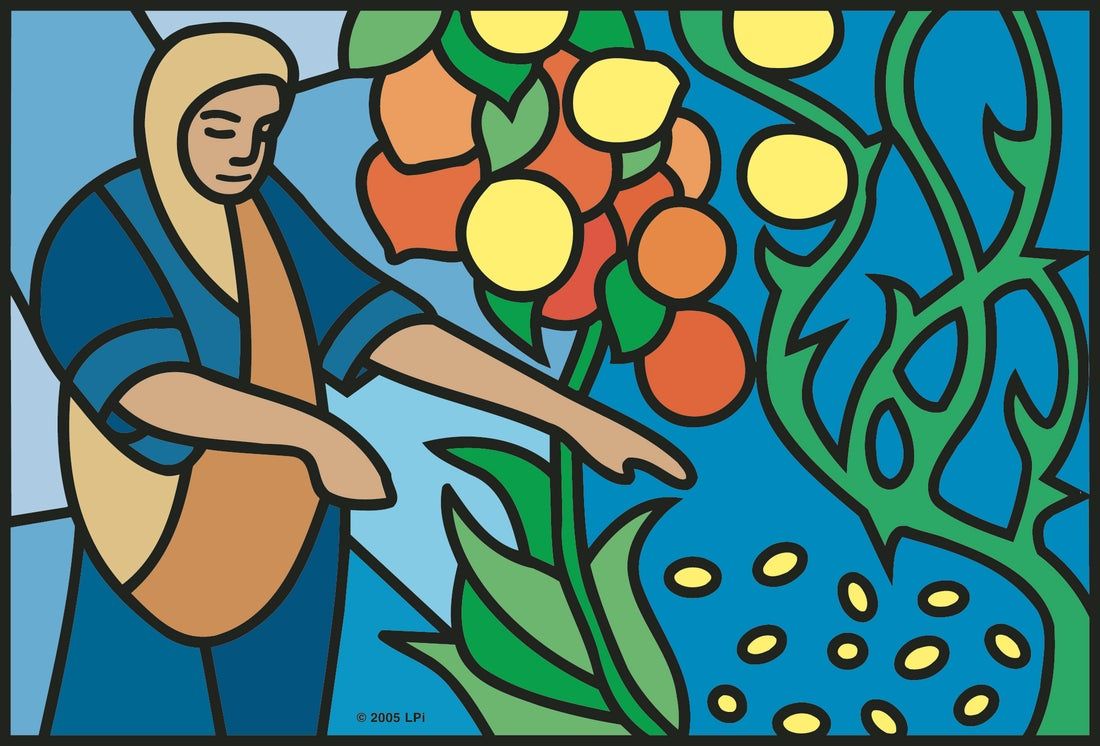
We are well into summer. I keep getting shown photos of the gardens people are tending in their backyards. It takes work and patience for produce to grow. Come in a few weeks and we will have a bountiful harvest of all kinds of produce. Those who are farmers can readily understand the parable of the sower in today’s Gospel. God sends out God’s word, and we are to be good soil for the word to take root. The challenge is to become fertile soil for the word of God. How do we become fertile soil? To be fertile ground, we need to keep an open mind. Too often I find myself not listening to what the other is saying, as I compose in my mind a response to what I think I am hearing. To really listen means to keep my mind open to receive what the other is saying. To listen means putting aside my agenda for a time. Sometimes the word of God struggles to get through all the noise in my brain. This is why quiet time in my day is so important; those who wish to listen to the voice of God go to a quiet place to listen for God. In these summer months we will spend time in quiet places where the word of God may speak to us. God’s voice is found at the seaside, in the woods, and on mountain tops. We need to quiet ourselves and listen for God’s voice. Making ourselves fertile ground for God’s word is not easy. We need to each day work to calm ourselves to hear God’s word. St. Ignatius of Loyola suggests a daily examen. Each day as we pray the Examen we become fertile ground. Here is how it is done: How to Pray the Examen Place yourself in God’s presence. Give thanks for God’s great love for you. Pray for the grace to understand how God is acting in your life. Review your day — recall specific moments and your feelings at the time. Reflect on what you did, said, or thought in those instances. Were you drawing closer to God, or further away? Look toward tomorrow — think of how you might collaborate more effectively with God’s plan. Be specific and conclude with the “Our Father.” Each day we work to make ourselves fertile ground.

On this July 4th weekend, we recall our land’s independence from a foreign king and a foreign government. We have thrown off the yoke of King George III; we are a free and independent nation. For 250 years we have been learning what it means to live as an independent and free society. Today Jesus invites us to consider taking upon a yoke as we go forward as disciples of him. The yoke of King George was too heavy for this nation, but the yoke of our God, we are told by Jesus, “is easy and light.” What is the yoke of Jesus? The yoke of Jesus is about the kingdom of God, learning to love others as we love ourselves. As disciples of Jesus we take on the yoke of the Gospel. When life feels heavy, we turn to our God, and our God helps to make our burdens light. There are many things in life that may seem like a yoke, a burden, but if we look at them in a new way, we see our God helping us to carry our burden. As Jesus invites us to consider the childlike, let me share with you a story: The Fable of The Birds At the beginning of time, all the animals were walking around discovering what it was like to be alive. All except the birds! They were doing nothing but complaining because God had given them a heavy burden that he’d given to no other animals: those awkward appendages on their shoulders. God must be punishing them somehow. Why did they have to carry these things around, making it hard to walk? “Why?" they asked. “Why us?” Finally, two or three of the more adventurous birds began to move their appendages. They began to flutter them, and soon they discovered that the very things they regarded as a burden actually made it possible for them to fly. And no other animals could fly. The “heavy burden” turned out to be a wonderful gift. Is there something in your life that at first glance seemed a burden, but later was seen as a gift? One reason why we value the innocent and simple among us is that they can help us to see life and who we are with new eyes. The simple or innocent can sometimes help us see what we thought was a burden as a gift. In the lives of the saints, we read about many who took what seemed to be a burden and made it an asset: The first disciples were simple fishermen. They were not scholarly, they couldn’t read, but they took their experience of Jesus and let it form them as disciples. What was a burden became an asset. Peter denied the Lord on the eve of his death. This made him more compassionate to sinners and those who struggled to have courage. Paul was blinded for 3 days; a former killer of Christians saw with new eyes and preached the good news to the Gentiles. Thomas doubted the Resurrection but came to faith in his doubt. Theresa the Little Flower loved Jesus and others with the simple love of a child of God. St. Kateri looked for and saw God present in the trees and the nature of the forests where she made her home. Mother Teresa of Calcutta saw our Lord present in the sick and dying in India. Blessed Stan Rother, a farmer’s son from Oklahoma who couldn’t read Latin, learned to speak in the native tongue of the men and women who he ministered with in Guatemala. With the eyes of a child, with childlike faith, we learn to see the burdens we carry as paths to faith in the help and care of our God. Let us give thanks today for the gift of freedom and let us give thanks for the gift of our God who makes our burdens light.
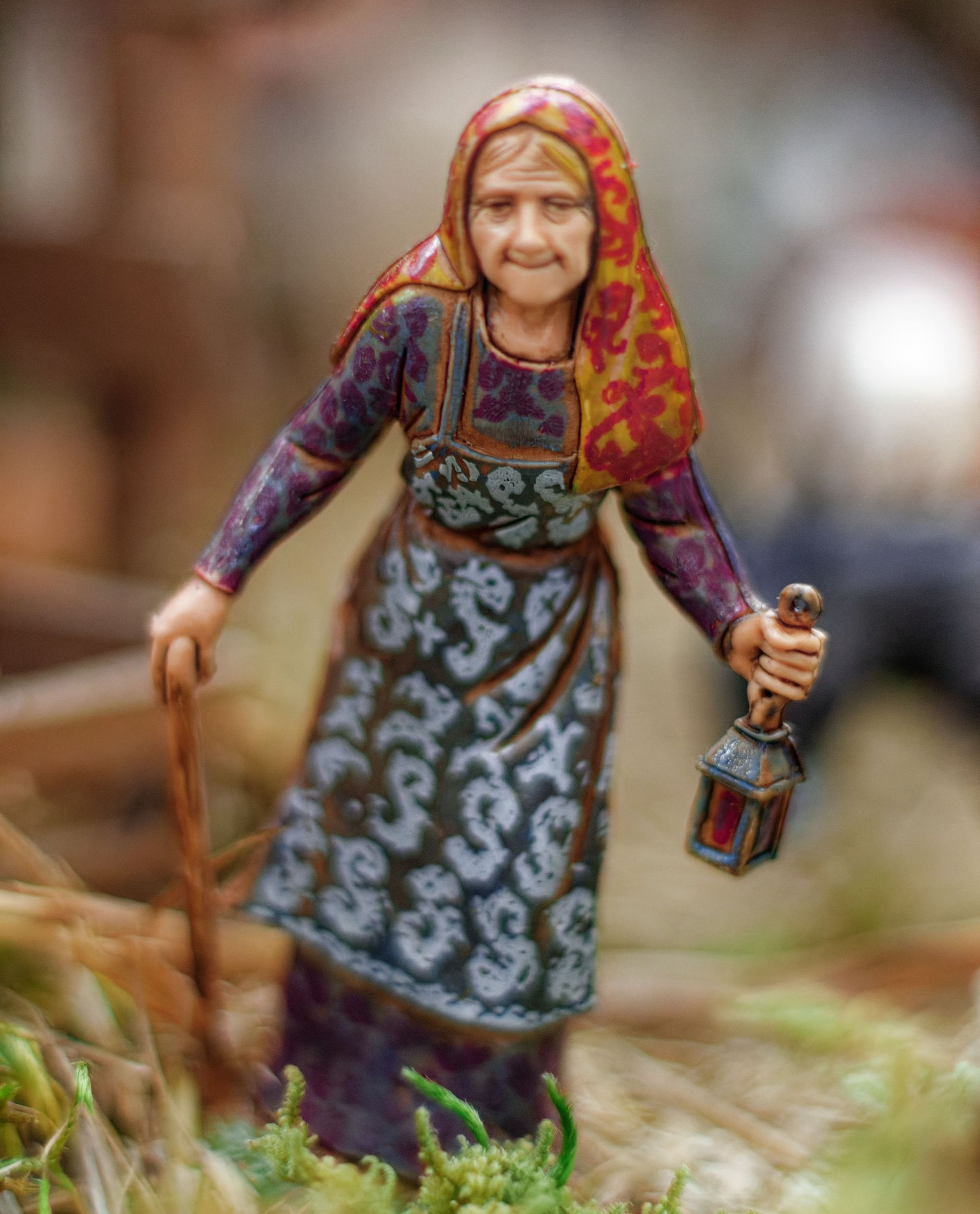
Our readings today speak of hospitality: In the first reading from 2 Kings, we hear how the woman made a room for the prophet Elisha. In the letter to the Hebrews, we read, “Be not forgetful to entertain strangers, for thereby some have entertained angels unawares.” In the Gospel, Jesus speaks, “and whoever receives me receives the one who sent me.” Hospitality is the essence of the life as a Christian. Many religious communities include this action as part of their rule. Hospitality is not easy. It seems that people are not in need on my schedule. Hospitality means stopping my actions and attending to others for a time. People are not in need on my schedule. Yet if I neglect them, I may miss out on entertaining angels. This summer there will be many who are in need. To them we offer our time and our hospitality. We are fortunate in our community that a hot meal is available seven days a week. I meet many in need when I stop to help out at Saturday’s Bread. Catholic Charities provides lunches to our students in July and August. You may want to consider helping to provide meals to our homeless and our students in the summer. It is so easy to get caught up in my schedule and I miss the chance to meet Christ in my neighbors and to miss out on entertaining angels. One thing I admired about Bishop Hubbard is that when he spoke to you, you were made to feel you were the most important person. As he spoke to you, he was moving on down the line, but for that moment you felt important, you were the most important person at that moment. How often do we make others feel that they are taking up our time or are a burden? On Thursday we celebrated LEON Day (Noel spelled backwards), which reminds us that we are six months away from Christmas. Maybe this is a good time to revisit a Christmas story. La Befana: The Witch of Christmas By Il Postino Staff and Tessa Derksen The legend of Befana began thousands of years ago and remains to this day a tradition practiced by Italian children and their families. As the story goes, one day, the three Magi left their country bearing special gifts of gold, incense and myrrh for the new-born Jesus Christ. They were guided by a star across many countries. At every village that they passed, people ran to meet them and accompany them in their journey. But there was one old woman who did not join the Magi. She claimed to be too busy with her housework and promised to join them later when she had time. The next day, she realized her mistake and frantically ran after the Magi with gifts for the child, still clutching her broom. But it was too late – the Magi were long gone. Let us not be too busy to meet Christ in our neighbors. Let us not be a Befana.

The last two popes chose names that pointed out what their main concern in their ministry would be. Pope Francis took the name of a man who advocated for the poor among us. Pope Leo XIV took the name of the pope who advocated for dignity of the workers in the world. Pope Leo XIII wrote the first encyclical speaking of the dignity of workers. His encyclical Rerum Novarum spoke of how the church should be an instrument for change in the world. Pope Leo XIV, in his encyclical Magnifica Humanitas , addresses his concern for the use of AI in our world. AI used in the correct way can be of benefit to humanity. Used in the wrong way, AI can lead to taking away the humanity of people. He uses two images to speak of AI. AI used in the wrong way can be like the Tower of Babel. The Tower of Babel, as found in the book of Genesis, was a tower built by people who sought glory for themselves. They had a single technology, a single goal all directed toward themselves without a concern for God. They started out united and the project caused division. Here is how Pope Leo puts it in his encyclical: The result is not unity, but dispersion. Babel thus reveals the limits of any effort that, however grandiose, arises from self-affirmation, sacrifices human dignity for efficiency and aspires to reach heaven without God’s blessing. The second image is taken from the book of Nehemiah, where the walls of Jerusalem were rebuilt. This is the image for the correct use of AI -- a technology that unites people, with God at the center, and preserves the dignity of the human person. Again, Pope Leo: It is an undertaking with God at the center, which rebuilds relationships before rebuilding with stones. Thus, ancient Jerusalem rediscovers a common language -- not one of uniformity, but one of communion, namely the harmony that arises when all persons assume their own role and recognize that their strength comes from the Lord. The pope expresses concern that AI may be used in ways that deny the unique nature of humans. As we go forward, we need to decide what we will build: will we build a Tower of Babel or the city of Jerusalem? The Pope ends his reflections by giving Mary’s song, the Magnificat , as the example on how we go forward: With the same faith as Mary, let us become “weavers of hope” in our world, sharing who we are and what we have, so that the presence of Jesus may grow among us and his Kingdom take shape. In the humble fidelity of daily life, even the era of AI can become a time in which the Holy Spirit brings about the civilization of love in our lives. Indeed, the Lord continues to make all things new and offers every era the possibility of becoming part of salvation history in the light of the Incarnation. I entrust our desire to the Mother of Christ, to the Woman of the Magnificat, that she may guide our steps through this time of change and preserve in each of us true faith in the Gospel, so that we may bear witness to the grandeur of humanity, in which God has made his dwelling.
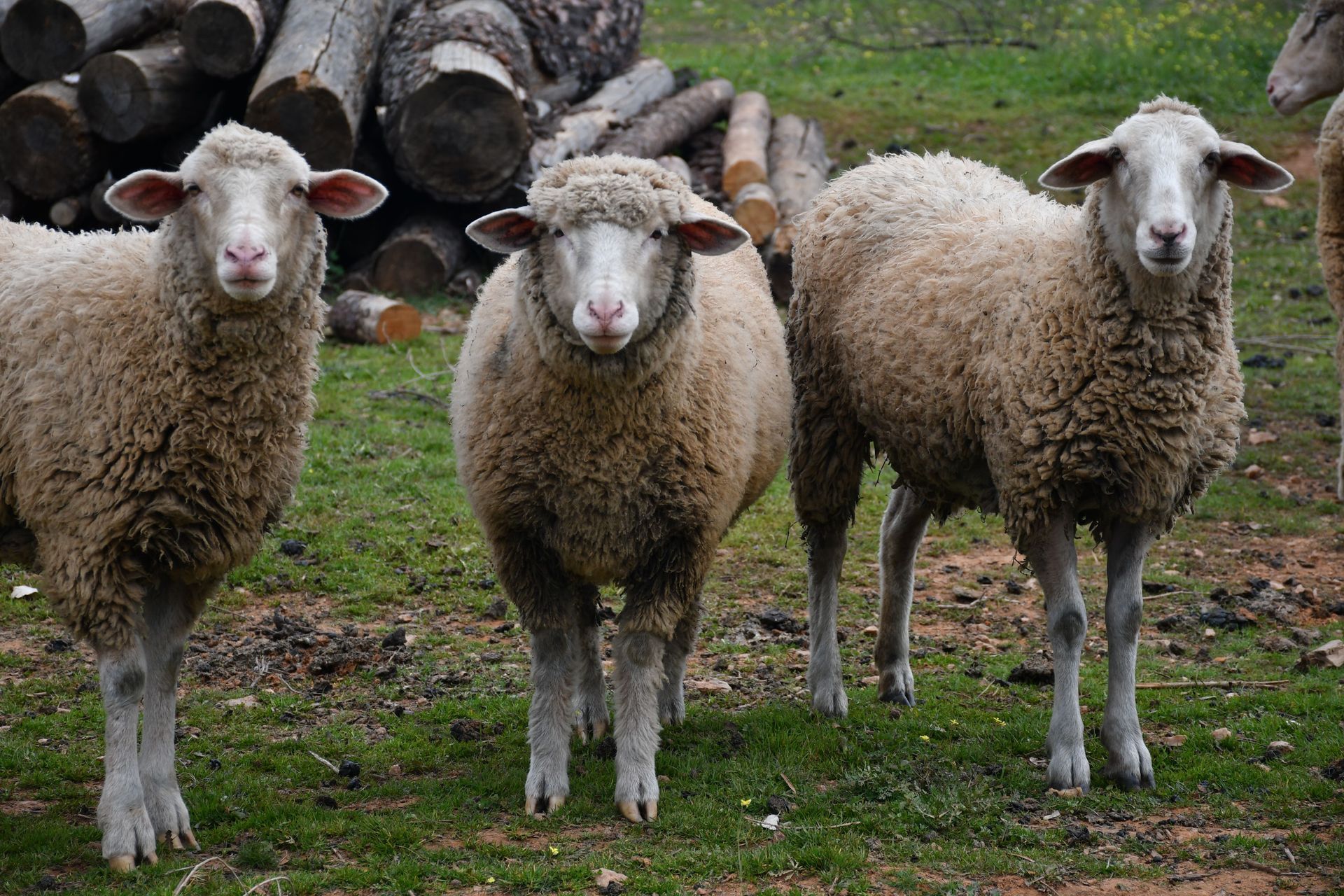
Our psalm today says: We are his people: the sheep of his flock . Once again, we hear how God is the good shepherd. We meet a good shepherd in the recent movie The Sheep Detectives . The movie is a mystery, so I won’t destroy the mystery. The one thing I thought was interesting was how when the sheep dealt with a difficult situation, they decided to forget about it. This reminded me of the situation in our culture -- how we like to avoid pain, pain of any kind. One of the hallmarks of our faith is the cross. The cross is a sign of hope and of pain. In life we are asked to take up our cross and carry it. If we choose to avoid the cross, we avoid pain and in doing so we avoid things that make us who we are. On the other side of the cross is new life and on the other side of pain is a new understanding of life. Those who embrace the pain find they are more compassionate people. Most people will tell you they do not like Lent. Lent is a season where we reflect upon our brokenness and our need for our God. On Ash Wednesday, the day when we are reminded of our mortality, the church is bursting at the seams. During Holy Week, few will come to church on Good Friday, the day we venerate the cross, but many will come on Easter Sunday to celebrate the new life of the resurrection. In doing do we avoid the cross and pain. We skip the cross and go right to the empty tomb. Those in recovery will tell you that the pain of allowing a higher power to be in charge is the path to serenity and a new way of life. The cross can help us to focus on the other rather than ourselves. It has been said, “No pain, no gain.” Part of our difficulties as followers of the Good Shepherd is that we wish to forget the difficult parts of the cross. I would like to be a sheep who chooses to forget what is painful to recall. We take this torture device, the cross, and wear it on chains around our necks or we display them on our walls. We take the pain of life, the pain of the cross, and we praise God’s kindness to us. Or in the words of Psalm 100, the psalm for today: The LORD is good; his kindness endures forever, and his faithfulness to all generations.
